
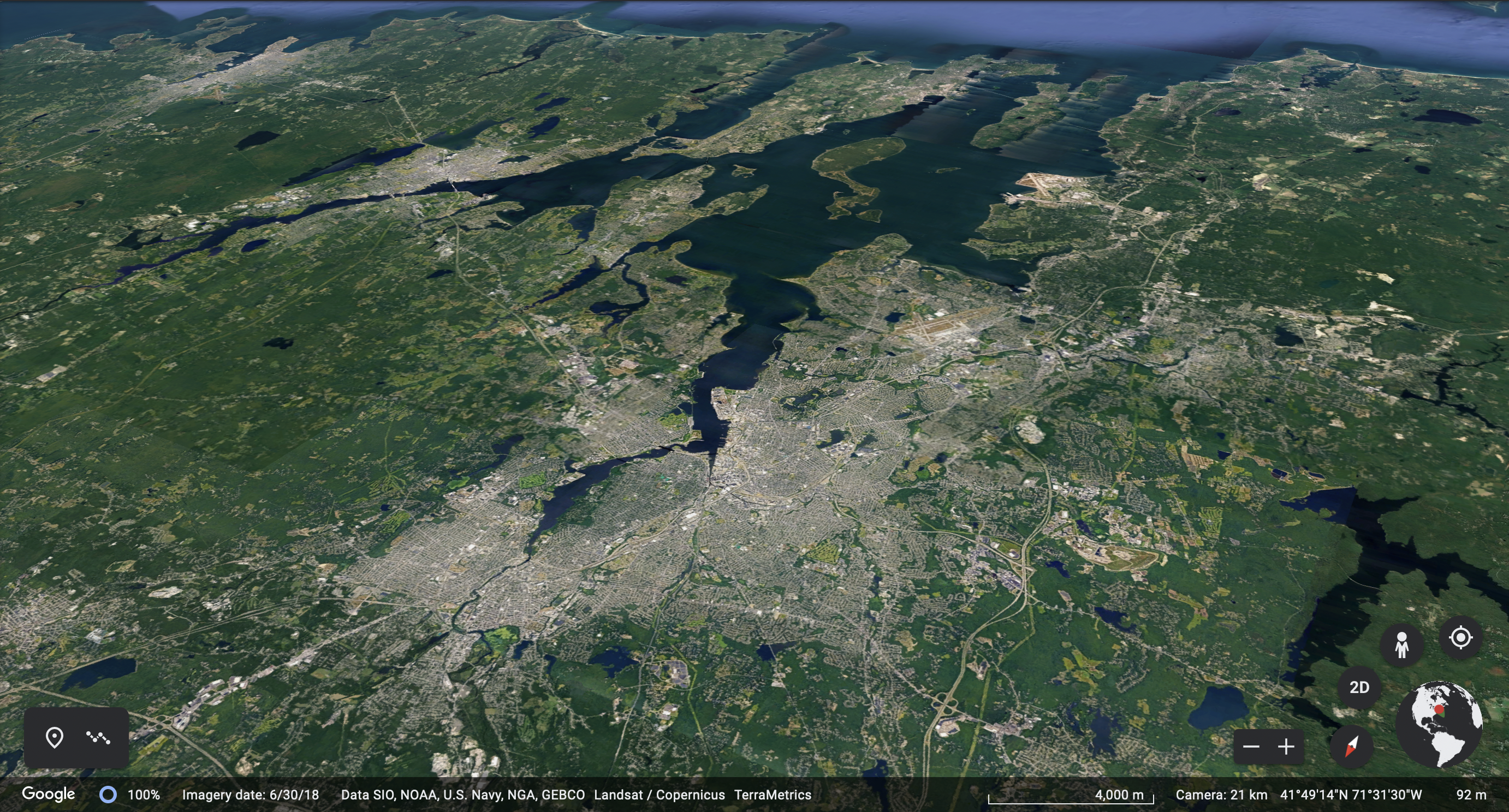
Watershed Metropolis narrates the history and life of sites where water used to be: sites that have been dammed, filled, graded, and paved in the name of progress and growth. The geographical focus is Providence, Rhode Island, a postindustrial city at the head of Narragansett Bay in the ancestral homelands of the Narragansett people.
In Providence, wetlands became parking lots, ponds became landfills, the Great Salt Cove became a freight yard, and the city’s namesake river was channelized and buried. In these and other ways, the coastal city iteratively decoupled itself—as a metabolic system and as a ground of lived experience—from its own hydro-ecological substrate in pursuit of dryness as the basis of an ideal urban form.
Blending history and ethnography; critical analysis and creative nonfiction, the project traces the contours of this hydrosocial order over space and time, with attention to the many “leaks” through which water has always nurtured other, co-present worlds.[1]
The spirit of the work is one that “yearns against” the prevailing instrumentalist mode of urban-environmental governance and the experiential sense of disconnection from water that it normalizes.[2] The motive concern is to articulate an ethics of relation to water, from a settler standpoint, that is interpersonal rather than instrumental, informed by a felt sense of the vital continuity between water and life.
[1] On “leaks” as an analytic in relation to urban water systems, see Nikhil Anand, Hydraulic City: Water and the Infrastructures of Citizenship in Mumbai, 1st ed. (Durham NC: Duke University Press, 2017), https://doi.org/10.1215/9780822373599.
[2] This phrase is borrowed from Cleo Wölfle Hazard, who writes of “yearning against settler-colonial affects that linger in river ecologists after encounters with beavers or their sign.” In Wolfe-Hazard’s Underflows: Queer Trans Ecologies and River Justice (University of Wahington, 2022). 113.
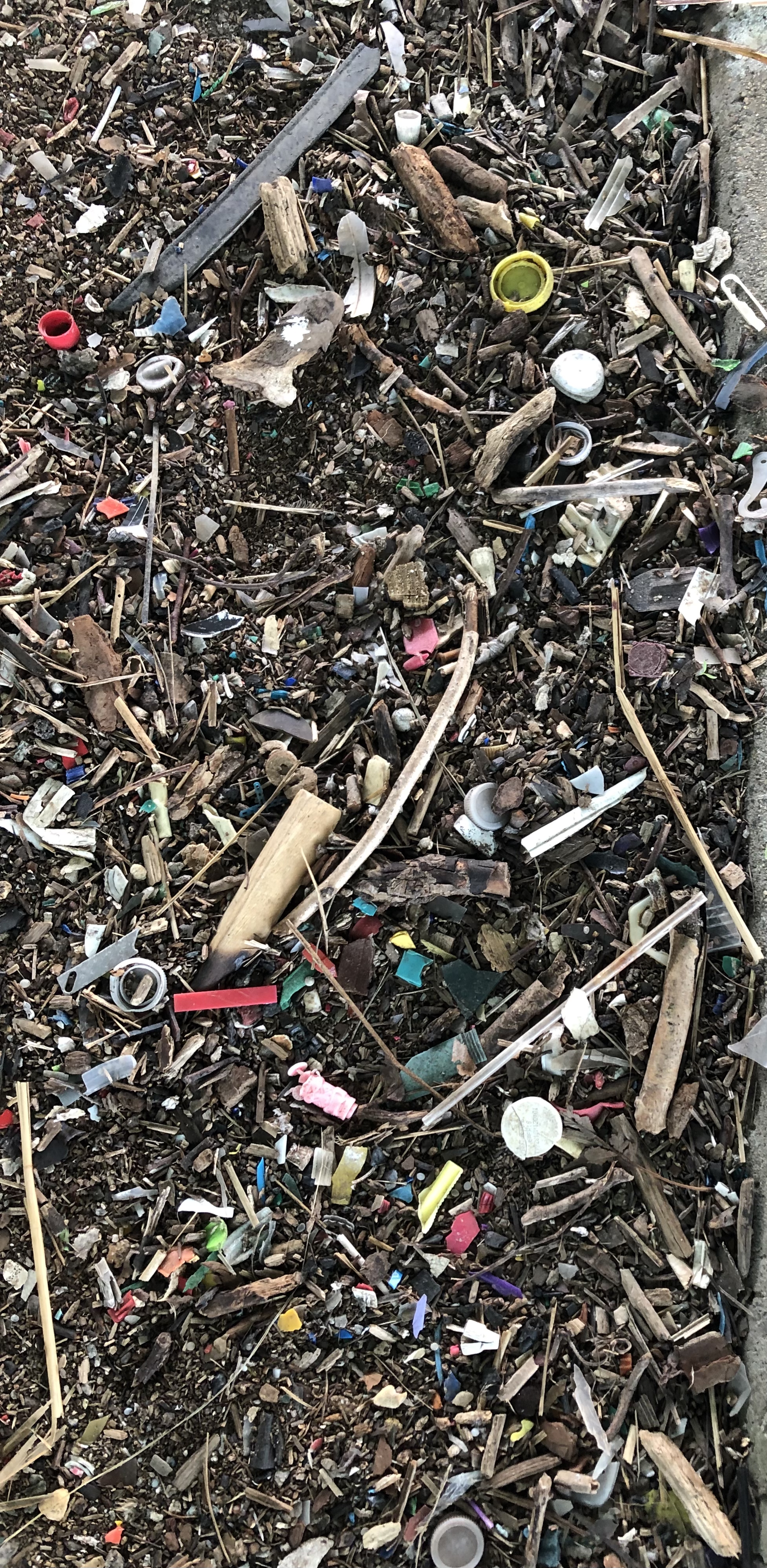
images: The Narragansett Bay watershed, including the Providence River, as captured by satellite (left); and an assortment of beached plastics seen at Collier Point Park in Providence (right).
 samia w cohen